
Native American Pottery
Cameron Trading Post, open since 1916, is your online source for Native American pottery from artists from various tribes. Indeed, Native American pottery of the Southwest is an ancient art form practiced for thousands of years. The Anasazi, Hohokam, Mogollon, and Mimbres cultures of the early Southwest left many examples of Southwest pottery behind when they disappeared centuries ago. This great mystery which has eluded anthropologists for years was no mystery to the Native American Indians of the Southwest. They have long known that the ancients did not disappear, but simply moved and changed; their progeny becoming the Native American Pueblo Indians of today.
American Indian pottery today is largely Pueblo pottery, although Navajo pottery has made an important recent appearance in the art form. Other types of pottery that you’ll see on our website include: Acoma pottery, Hopi pottery, Santa Clara pottery, the pottery vessels of the San Ildefonso, Jemez, and Zia are the main sources of contemporary Native American pottery. If you have any questions about our Native American pottery, please contact us here.
Color
Color (Basic)
Flavor
Length
Ring Size
Size
Holster Side
Rug Size
Shop For
Stone
Tribe
Artist
Price
-
NEW!
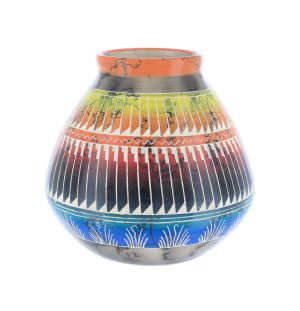
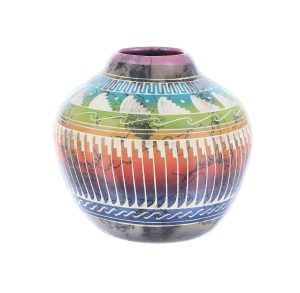
 Navajo Horse Hair Pottery$79.99
 -
NEW!
 Navajo Horse Hair Pottery$56.99
 -
NEW!
 Navajo Horse Hair Pottery$72.99
 -
NEW!
 Navajo Horse Hair Pottery$36.99
 -
NEW!
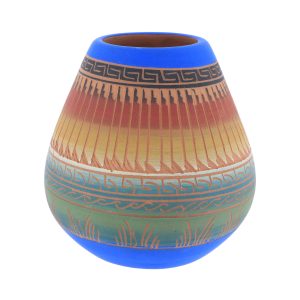
 Navajo Etched Pottery$64.99
 -
NEW!
 Navajo Horse Hair Pottery$64.99
 -
NEW!
 Navajo Horse Hair Pottery$64.99
 -
 Navajo Pottery$1,625.00
 -
 Navajo Pottery$1,895.00
 -
Navajo Pottery$2,925.00
-
 Navajo Pottery$1,525.00
 -
 Navajo Etched Pottery$49.99


The History of Native American Pottery
The Pueblo pottery maker’s art has changed little in the last two millennia. Fine Native American Indian pottery is still hand formed using clays that are collected locally. Like the people of New Mexico’s Acoma “Sky City”, creating traditional, thin walled Acoma pottery for generations. Vessels like traditional Hopi pottery are hand scraped, hand polished, hand slipped, and in most cases still fired in backyard kilns consisting of pottery shreds and manure. The cost of Southwest pottery reflects not only the great artistry, but also the time involved in creating each piece. From the first trek to gather the clay to the final piece cooled from the fire the Pueblo potter has invested weeks, and there are no guarantees in each phase that the clay will prove true or that the piece will not shatter in the firing, as often happens.
The color, shape, and design of Native American pottery is influenced by the Pueblos culture. In the Southwest, pottery making is an heirloom passed from one generation to the next. Santa Clara and San Ildefonso pottery is known for its black or red color and high polish, a technique revived by Maria Martinez and her husband Julian. Acoma pottery is famous for thin walls and intricate painting. Hopi pottery with its sublime form, symbolic designs, and earth-toned slip is also world renowned. Please browse our Acoma pottery, Hopi pottery, historic pottery, horse hair pottery, and storytellers selections for beautiful and antique designs from artists from various Native American tribes.
Native American Pottery Traditions of the Southwest
Navajo Pottery
The Navajo people, the largest recognized tribe in the United States, have a rich cultural heritage that extends across the Four Corners region. While the Navajo are traditionally known more for their weaving, silverwork, and sand painting, pottery has played an important role in their cultural practices and daily life. Unlike some other Southwestern tribes, the Navajo came to pottery-making relatively later, likely learning from their Pueblo neighbors. Historically, Navajo pottery was primarily utilitarian, created for cooking and storage rather than ceremonial or decorative purposes. However, this changed significantly in the 20th century as Navajo artisans began developing their own distinctive styles. Navajo potters traditionally gather clay from sacred sites within their territorial lands. The clay is meticulously processed through cleaning of debris, grinding, and mixing with crushed pottery shards (temper) to prevent cracking during firing. The pottery is primarily constructed using the coil-built method, where ropes of clay are carefully layered and smoothed to create the desired form. Browse our Navajo etched pottery here.
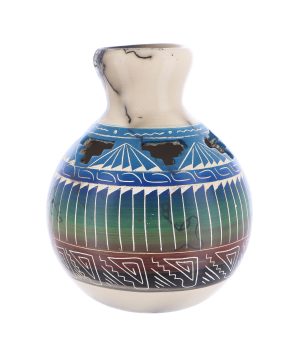
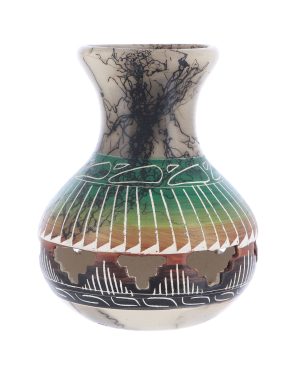
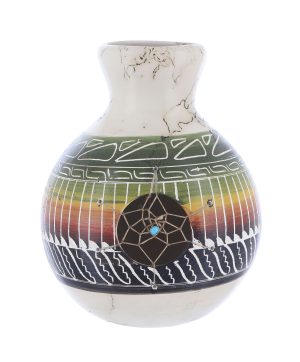
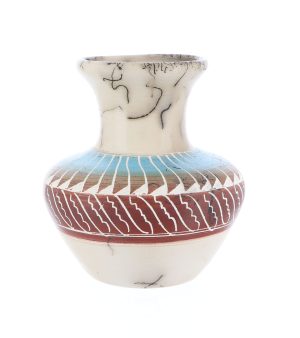
One common type of Native American pottery you’ll see on our website is the Navajo wedding vase. These beautiful vases feature double-spouted vessels, which represent the union of two lives. These pieces often feature traditional designs incorporating corn, mountains, and sacred symbols, and play an important role in traditional wedding ceremonies. Lastly, Navajo horse hair pottery is a pottery technique developed by Navajo artisans which involves applying horsehair during the firing process. This creates distinctive black carbon markings on the surface of the pottery, which are often combined with traditional designs and forms to create unique pieces.
Acoma Pottery
The Acoma peoples’ pottery tradition is among the most renowned in the Southwest. Acoma pottery-making dates back over 1,000 years, with techniques and designs passed down through generations of women. The tradition has remained remarkably consistent, maintaining high standards of craftsmanship and distinctive geometric designs. The Acoma pottery tradition begins with clay gathered from specific sites in the Acoma territory. The clay undergoes multiple stages of cleaning, aging, and preparation to achieve the perfect consistency. Construction follows the coil method, with careful smoothing using tools made from gourds. Painters use natural pigments, including Rocky Mountain Bee Plant for the characteristic black designs. The pottery is fired using traditional outdoor firing methods that have been perfected over generations.
The Acoma are renowned for their incredibly precise geometric patterns, complex checkerboard designs, and intricate hatching and cross-hatching work. These elements demonstrate the exceptional skill and patience of Acoma artisans. Traditional Acoma pottery encompasses a wide range of forms, including seed pots, water jars, large storage vessels, and contemporary sculptural forms. Each piece showcases the distinctive Acoma aesthetic and technical mastery.
Jemez Pottery
Another type of Native American pottery you’ll find on our website comes from local Jemez pottery artists. The Jemez (Walatowa) Pueblo, located in north-central New Mexico, has developed a distinctive pottery tradition that reflects their unique cultural identity and environment. While Jemez pottery-making declined in the late 19th century, there was a significant revival in the 1960s and 1970s. Modern Jemez pottery combines traditional techniques with contemporary innovations.
Jemez potters work with red clay sourced from specific locations within their territory. They employ the traditional coil method for construction and are known for their distinctive use of red slip and black designs. The open firing method often results in characteristic fire clouds that add unique character to each piece.
Hopi Pottery
The Hopi people, residing on mesas in northeastern Arizona, maintain one of the oldest and most continuous pottery traditions in the Southwest. Hopi pottery tradition spans over 1,000 years, with distinct periods marked by evolving styles and techniques. The art form is deeply integrated with Hopi religious and cultural practices. The Hopi pottery process begins with clay gathered from specific sacred sites. The materials are processed using traditional methods of cleaning and aging, followed by construction using the coil-built method. Decorative elements are created using natural pigments and traditional designs, and the pieces are coal-fired in outdoor kilns.
Hopi potters create a variety of vessels including ceremonial pieces, water jars, seed pots, and prayer meal bowls. Each type serves both practical and spiritual purposes in Hopi culture. Hopi pottery is recognized for its yellow-ware pottery, polychrome designs, migration patterns, and Katsina figures. Traditional symbols representing clouds, rain, and corn are frequently incorporated into designs, reflecting the agricultural and spiritual foundation of Hopi life.
Native American Pottery FAQs
How to identify Native American pottery?
To identify genuine Native American pottery, you’ll need to observe the shape, design, and materials which vary by tribe. Look for distinctive tribal symbols and motifs, and take a close look at the pot’s technique, such as hand coiling. Many pieces will have a signature to indicate what artist crafted it. Often older, antique works will show signs of wear. Consult books, online resources, or experts for verification, and be cautious of reproductions. If you have questions about identifying whether the pottery is made by a Navajo, Hopi, Pueblo, Acoma, or other artist, please don’t hesitate to contact Cameron Trading Post.
How is Native American pottery made?
Native American pottery is crafted using local clays, shaped through techniques like coiling or paddle-and-anvil. Once shaped, pots are often painted with natural pigments to depict tribal symbols and motifs. The pieces are then fired, either in kilns or open pits, solidifying and setting their form. The techniques and designs vary by tribe, reflecting their unique cultural influences and regional materials.
How to clean Native American Indian pottery vases?
To clean your pottery, use a soft, dry cloth or a soft brush to remove loose dust. If further cleaning is needed, dampen the cloth with distilled water and gently wipe the surface. Avoid using household cleaners or submerging the pottery in water. Always handle the pottery with care, as it can be fragile, and ensure it dries completely after cleaning to prevent moisture damage.
What does the mountain symbolize in Native American pottery?
In Native American pottery, the mountain often symbolizes the Earth’s foundation and the connection between the physical and spiritual realms. Mountains are revered as sacred places where one can gain spiritual insight and clarity. Their portrayal in pottery reflects the Native Americans’ respect for the land and the spiritual significance they attach to natural landmarks.
Shop Pottery Online with Cameron Trading Post!
At Cameron Trading Post, we are closest to the Hopi, but Hopi pottery is represented no more than Acoma pottery, Santa Clara pottery or any of the Navajo or Pueblo pottery of the Southwest. In the tradition of the Indian trading post, Cameron Trading Post endeavors to bring the Native American Indian pottery of all cultures together under one roof, offering a selection of Southwest pottery for the casual admirer or the serious collector of American Indian Pottery. The artistry of American Indian pottery and ceramics are recognized globally, names like Maria Martinez, Lucy Lewis, Fannie Nampeyo, Margaret Tafoya, Joy Navasie, and Helen Naha are known throughout the world. Pueblo pottery is collected avidly by people from all walks of life.
Southwest pottery has an intrinsic beauty that speaks to the basic common humanity in all of us. A simple piece of Pueblo pottery from the tentative hand of a child first learning the art holds the knowledge of one hundred generations. Therein lies the soul of Native American pottery of the Southwest in the Americas. If you’re looking for something other than pottery, check out our other Native American art here.